PRISCILLA MCKINNEY • LINKEDIN STRATEGY
Make LinkedIn Work Through
Connection, Not Competition
Mastering visibility, value, and voice on the world’s largest professional network
THE BIG IDEA
LinkedIn Strategy Starts With a Mindset Shift—Are You Just Taking Up Space?
Stop treating LinkedIn like a résumé you update every few years. It’s not a parking lot for credentials. It’s an always-on professional network—a room full of over a billion professionals exchanging ideas, solving problems, and building relationships right now. The question isn’t whether you have a profile. The question is whether you’re actually showing up.
There is a real difference between being “on LinkedIn” and having an active LinkedIn strategy. One means you have an account and check in occasionally. The other means you engage, listen, contribute, and become a thought leader other people genuinely want to follow. Research shows 93% of B2B buyers prefer to work with a recognized leader in their field—and 57% of the buyer’s journey is already complete before a prospect reaches out to anyone. If your ideal clients are researching solutions, they’re building a shortlist from the content they’ve already consumed. The question is whether any of it came from you.
This guide draws from the collaboration-first philosophy at the heart of Priscilla McKinney’s book, Collaboration Is the New Competition. The same principles that make strategic collaboration a competitive advantage in business—generosity, intentionality, and genuine interest in others—are exactly what make someone the most sought-after guest in any room, including a digital one. LinkedIn is where collaboration begins, long before anyone sits down at a conference table.
93%
57%
14
PART ONE
LinkedIn Profile Optimization:
Get Your House in Order First
Your LinkedIn profile optimization is the foundation everything else is built on. It works before you say a single word—doing the job of a first impression at scale, for every person who lands on your page. A polished, well-organized profile signals you’re serious about your work and ready to engage. Without it, even the best conversations won’t lead anywhere.
The goal is to guide visitors the way a good host guides guests—make them feel they’re in exactly the right place, reduce friction that might make them leave, and let each section flow into the next as a cohesive story. Your profile should answer questions before people think to ask them. Think of it as lowering the reader’s anxiety: they want to know quickly whether you’re relevant to them, credible in your space, and worth spending time on.
Profile Photo
Your First Impression
Use a recent, professional image—what your house looks like today, not years ago. A clear, approachable photo builds trust before a word is read.
Headline
Your Introduction
Skip the generic job title. Craft something specific that signals your expertise and the value you bring. “Helping businesses scale through innovative marketing strategies” says far more than “Consultant.”
About Section
Your Story
Focus on what you bring to the table and how you solve problems for your ideal clients. Start with a hook that makes them want to read more—not a summary of your CV.
Experience
Your Impact
Highlight outcomes, not just responsibilities. What changed because you were there? Specifics that demonstrate real-world results carry far more weight than a list of duties.
The Featured section is your conversation-starter shelf. Use it to showcase articles, videos, or case studies that reflect your thinking and spark genuine curiosity. These aren’t trophies—they’re invitations into meaningful dialogue.
PART TWO
Professional Networking on LinkedIn: Quality Over Headcount
Effective professional networking on LinkedIn isn’t about accumulating connections—it’s about curating them. Your network should be a deliberate collection of people who align with your goals: prospects, collaborators, industry voices, and advocates. Chasing a high connection count is one of the most common LinkedIn mistakes. Quality always wins over quantity, and intentionality is what makes a network actually produce results.
“You don’t sell to your network.
You sell through it.”
— Priscilla McKinney
This is one of the core insights in McKinney’s work on collaboration: the people in your professional community are not a list of transactions waiting to happen. They are advocates, connectors, and amplifiers—when you treat them that way. Building relationships with people who trust you extends your reach and credibility far beyond what any solo effort could achieve. This is the hive mind principle at work on the network level: your individual reach multiplies through the people who know, trust, and vouch for you. Collaboration doesn’t begin when a deal is on the table. It begins in the relationships built long before anyone is ready to partner or buy.
4 Steps to a Network that Actually Works
Define your ideal connection.
Effective LinkedIn networking starts with knowing exactly who you’re looking for—decision-makers, industry voices, professionals in complementary roles. Build a clear profile of your ideal connection, including role, industry, and shared interests, then use LinkedIn’s advanced search tools to find them. Before you send a connection request, engage with their content first. Comment thoughtfully, share something relevant, acknowledge a milestone. Build rapport before asking for anything. The connection request should feel like a natural next step, not a cold approach.
Audit what you already have.
Your next great opportunity may already be sitting in your existing network. Review your connections regularly and identify who you should re-engage—people whose work aligns with yours, whose audience overlaps, or who could benefit from an introduction you’re in a position to make. Send a personalized message that references a shared interest or a past conversation rather than a generic re-introduction. Sort your connections into meaningful categories: current clients, prospects, collaborators, and mentors. Reaching out to one person from each group every week keeps relationships warm without requiring heroic amounts of time.
Use LinkedIn’s tools with intention.
The platform offers more than most people use. Join groups in your niche, participate actively in discussions, and always include a personalized note with connection requests. A specific, genuine reason for reaching out converts far better than the default prompt—and it signals immediately that you’re someone worth knowing, not someone working through a list.
Nurture relationships over time.
LinkedIn networking doesn’t end when someone accepts your connection request—that’s where it starts. Dedicate time each week to engage meaningfully with content from your network. Offer advice, make introductions, share resources. Position yourself where your ideal connections naturally gather, show up consistently, and over time they’ll start coming to you. Generosity is the currency of a strong professional community, and it’s also the foundation of every real collaboration. The people who give the most freely are almost always the ones who receive the most in return.
PART THREE
LinkedIn Engagement Tips: Show Up and Actually Talk to People
LinkedIn engagement is where thought leadership actually gets built—not in the content you post, but in the conversations that content starts. The profiles that gain real traction aren’t the ones with the most polished posts. They belong to people who show up consistently, respond genuinely, and treat every comment as a conversation worth having. Step into the room by joining discussions already in progress. Comment thoughtfully, share meaningful insights, and engage in a way that reflects your expertise and personality.
Effective engagement requires a balance of listening, contributing, and connecting—and listening comes first. At any good gathering, the best conversationalists aren’t the ones who talk the most. They’re the ones who ask the right questions, genuinely hear the answers, and respond to what’s actually there. On LinkedIn, that means actively reading others’ content and showing real interest before sharing your own perspective. Listening builds trust, and trust is the foundation of every collaboration worth having.
Three Behaviors That Define Exceptional Guests
- Listen first, always.
Spend ten minutes a day engaging with three posts and starting one new conversation. This small commitment builds visibility and momentum without feeling like a second job. Join active LinkedIn groups where your ideal connections gather—answer questions, share expertise, and respond with genuine insight rather than performative agreement. - Avoid the pitch slap.
There is nothing worse than connecting with someone only to receive an immediate sales pitch in return. It’s the digital equivalent of barging into a conversation and shouting your agenda. Build trust first through consistent, authentic engagement. Use polls to spark conversation. Ask open-ended questions. Create space for dialogue before you ever ask for anything. When business eventually comes up, it will feel natural—because it is. - Tag thoughtfully to bridge connections.
When you see a discussion that would interest someone in your network, tag them with a brief note explaining why it’s relevant. Tagging isn’t just about visibility—it’s an opportunity to introduce two people who could benefit from knowing each other. When someone shares valuable content, acknowledge it specifically. That kind of genuine recognition is how meaningful dialogues begin and how reputations as connectors are built.
PART FOUR
LinkedIn Content Strategy: How to Become a Thought Leader Worth Following
A strong LinkedIn content strategy is what separates people who are occasionally visible from people who are consistently recognized as thought leaders in their field. Content is how you demonstrate expertise before anyone asks for it, build trust before anyone is ready to buy, and establish the kind of credibility that makes collaboration feel natural rather than transactional. The goal isn’t to broadcast your expertise at the whole room—it’s to narrowcast: to target a specific audience, speak directly to their challenges, and give them a reason to keep paying attention.
Your ideal clients don’t care about your snowplow. They want to know whether you’ll help them clear their driveway. Frame your content around their challenges, their goals, and the outcomes they’re trying to reach. The more targeted your message, the more meaningful your connections become—and the more likely those connections eventually become collaborations.
“Great content isn’t just about publishing–it’s about starting conversations that lead to meaningful connections.”
— Priscilla McKinney
The Rule of 15
Priscilla’s Rule of Fifteen is the content framework that sits at the center of both this guide and her broader work on collaboration. The same mix that makes your content trustworthy is what makes you a credible collaborator. It’s a ratio, not a countdown—and the mindset behind it matters more than the math.
10
4
1
The Rule of Fifteen applies beyond content—it’s also a test for relationship-building before any collaboration is proposed. Have you shown up consistently? Been interested as well as interesting? Offered something before asking for anything? If yes, make the ask. If not, keep showing up. The ask will land when the groundwork is actually there.
Five Practical Tips for Boosting Engagement
- Respond to comments—don’t just like them.
Ask a follow-up question. Extend the dialogue. Thoughtful replies build rapport and signal to both the commenter and the algorithm that something worth engaging with is happening here. - Diversify your content formats.
Mix text posts with short videos, infographics, and carousels. Different formats reach people with different habits and break the scroll-induced numbness that uniform content creates. - Share the spotlight.
Highlight others’ work and add your own perspective when you share it. This signals generosity, builds goodwill, and almost always prompts reciprocity—which expands your reach organically without spending a dollar. - Tag collaborators and mentors when relevant.
Pull people into discussions where their expertise adds value. Done well, this positions you as a connector—someone who makes conversations better by bringing the right people into them. - End every post with a clear call to action.
“What’s your take? I’d love to hear your perspective in the comments” is all it takes to turn a passive reader into an active participant. Ask for the conversation explicitly, every time.
THE BIGGER PICTURE
Collaboration Is the New Competition—and LinkedIn Is Where It Begins
The tactics in this guide aren’t just LinkedIn tips. They’re the early expressions of a collaboration-first mindset—the same philosophy McKinney lays out in depth in Collaboration Is the New Competition. Her argument is that bigger wins come to those who collaborate strategically, and that the future of work rewards a cross-pollinating hive mind approach. Every relationship built on LinkedIn before anyone is ready to buy or partner is future collaboration currency. The people who show up consistently, generously, and with genuine interest in others are the ones who get invited into the rooms where the bigger opportunities happen. Unseen is unsold—but more than that, unseen means uncollaborated with. And that’s the opportunity most people are leaving on the table.
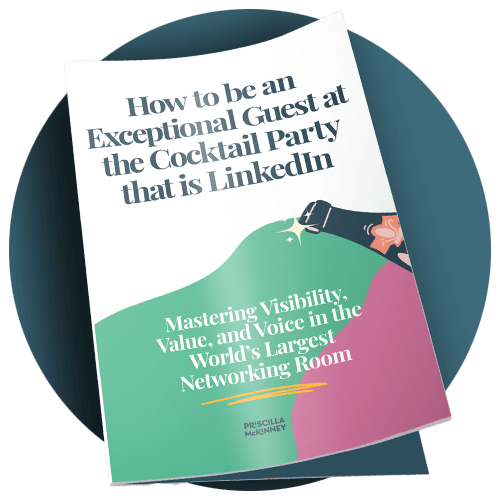
Get the Full Guide—Free
Priscilla’s complete LinkedIn framework, designed to take you from invisible to indispensable—one genuine connection at a time.
ABOUT THE EXPERT
Priscilla McKinney
Priscilla McKinney is the CEO and Founder of Little Bird Marketing and the author of Collaboration Is the New Competition: Why the Future of Work Rewards a Cross-Pollinating Hive Mind and How Not to Get Left Behind. With over two decades at the intersection of marketing, business strategy, and market research, she has built a reputation for transforming how companies approach social influence, thought leadership, and real business growth.
Her central argument—that the future of work belongs to those who learn to collaborate strategically—shapes everything she teaches about LinkedIn. The platform isn’t a place to park your résumé or broadcast your achievements. It’s the cocktail party where collaboration begins, one genuine connection at a time.